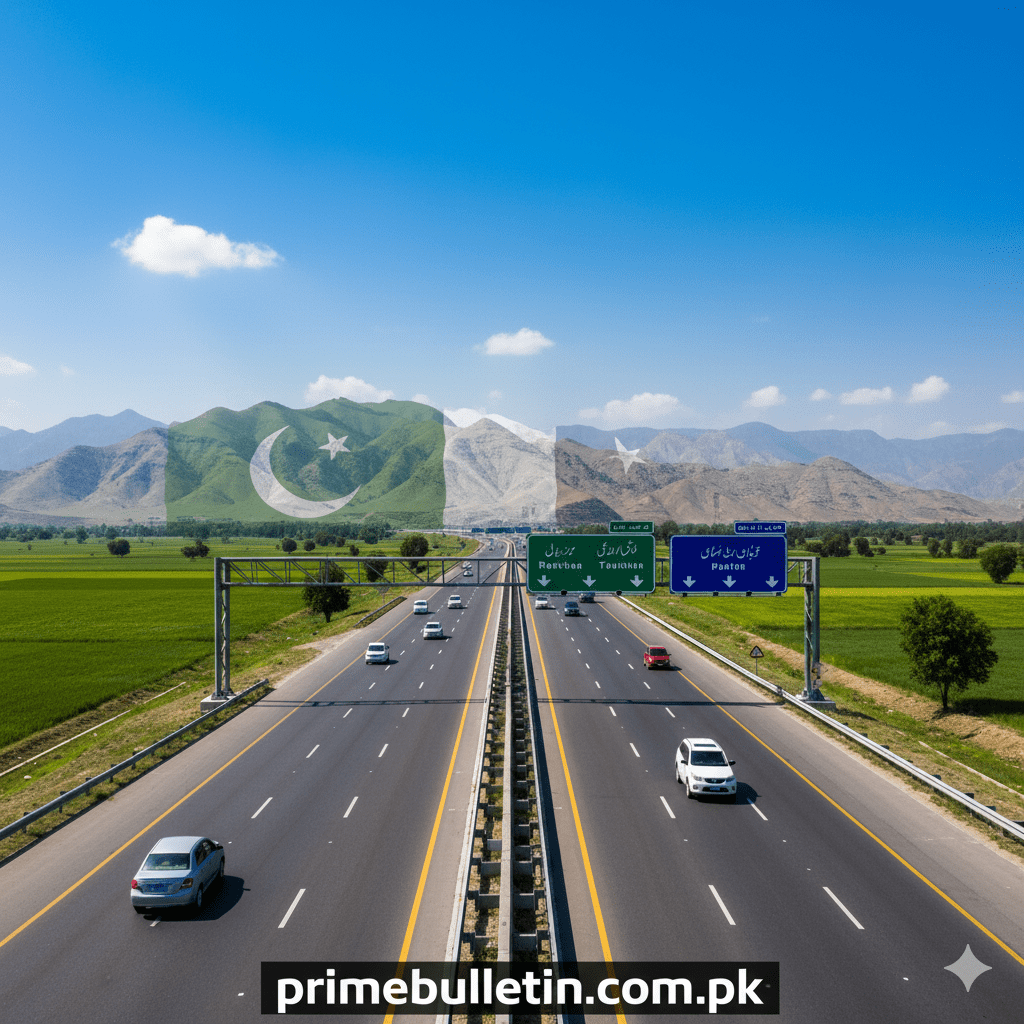
Pakistan’s motorway network is undergoing rapid expansion, with several new projects launched to improve connectivity, trade, and tourism. From major economic corridors to scenic tourist highways, these developments are set to reshape travel and logistics across the country.
Newly Built & Ongoing Motorway Projects
M-12 Sambrial–Kharian Motorway
The M-12 is a 69 km six-lane motorway that connects Sambrial to Kharian via Gujrat and Jalalpur Jattan.
-
Cost: Rs. 81.97 billion
-
Features: Five interchanges, advanced service areas, and a major bridge over the Chenab River
-
Impact: Reduces travel time between central Punjab cities and provides smoother connectivity with the national motorway grid.
M-13 Kharian–Rawalpindi Motorway
Stretching 117 km, the M-13 motorway links Kharian, Jhelum, Gujar Khan, and Rawalpindi.
-
Design: Six lanes, interchanges, rest stops, and tunnels across the Salt Range
-
Benefits: Significantly cuts travel between Rawalpindi and central Punjab, while easing traffic pressure on GT Road.
M-6 Sukkur–Hyderabad Motorway
One of the most crucial projects in Sindh, the M-6 is part of the CPEC (China–Pakistan Economic Corridor).
-
Length: 306 km
-
Purpose: Links southern Sindh to central Pakistan
-
Economic Value: Improves cargo transport from Karachi Port to upcountry, strengthening trade and exports.
Karachi–Sukkur Motorway (New Alignment)
Announced in 2025, this new alignment will directly connect Karachi to Sukkur, offering a faster and safer trade route.
-
Expected to support cargo movement and reduce dependency on older highways.
Tourism Motorways in Northern Pakistan
To boost tourism, new motorways are being built in Khyber Pakhtunkhwa and Gilgit-Baltistan:
-
Mansehra–Kaghan–Naran–Chilas Route (235 km) – Linking scenic valleys with international-standard infrastructure.
-
All-weather Motorway KP–GB – Includes tunnels at Babusar Top to allow year-round access.
-
Mansehra–Muzaffarabad Motorway (26 km) – Approved with Saudi funding, connecting Azad Kashmir to the national network.
Benefits of the Motorway Expansion
-
Faster Travel – Hours cut from major intercity journeys.
-
Boost to Trade & Logistics – Karachi-to-north routes ensure quicker cargo delivery.
-
Tourism Growth – Northern projects open up new scenic areas for travelers.
-
Stronger Economy – Smooth transport improves exports, imports, and investment opportunities.
-
Better Regional Integration – Provinces connected more effectively, supporting balanced development.
Challenges Ahead
-
Funding & Delays – Some projects face slow progress due to financing issues.
-
Flood & Climate Risks – Recent floods partially closed parts of the M-5, raising concerns for new roads.
-
Maintenance Needs – Continuous upkeep required to ensure safe travel.
-
Land & Environment Issues – Especially for tunnels and northern routes, requiring careful planning.
Conclusion
Pakistan’s motorway network is entering a transformational phase in 2025. With new projects like M-12, M-13, M-6, and northern tourism routes, the country is paving the way for economic growth, smoother connectivity, and stronger tourism opportunities. If executed efficiently, these routes will not only reshape travel but also strengthen Pakistan’s role as a regional trade hub.
About the Author