
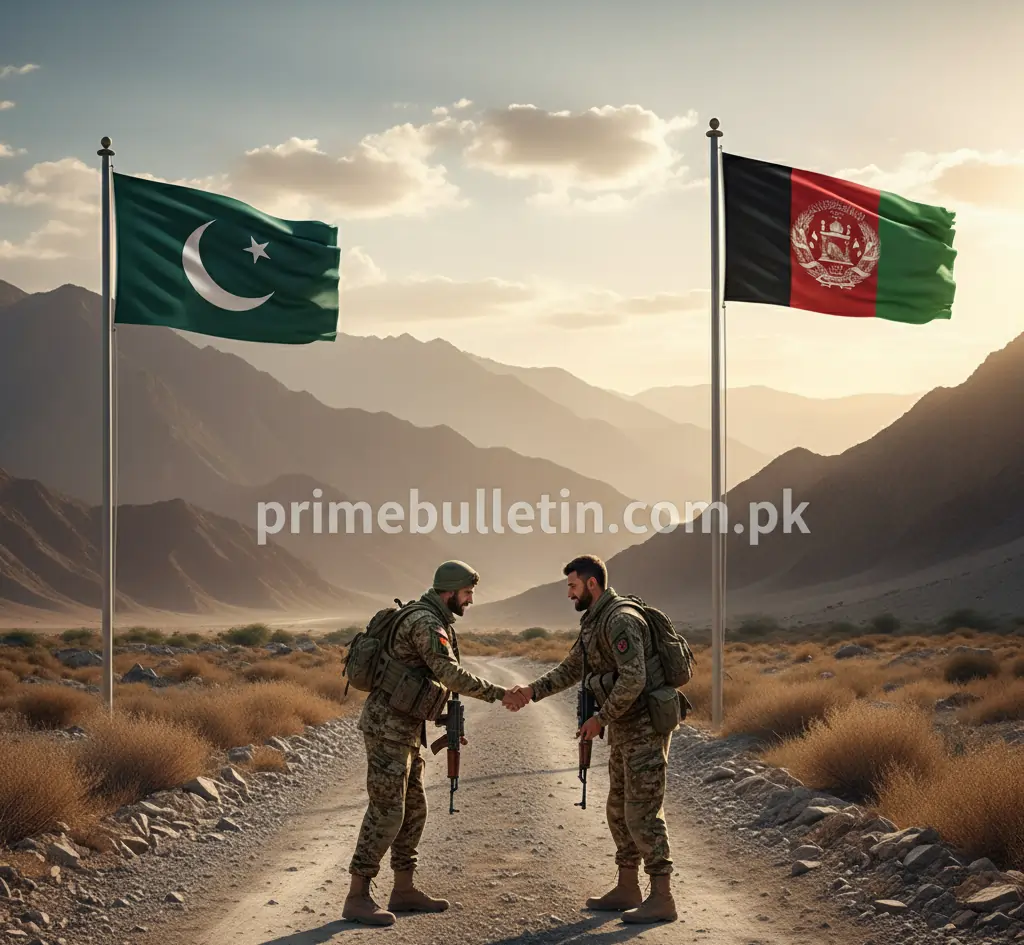
Historic Pakistan-Afghanistan ceasefire: Flags wave side by side as peace returns to the border following Istanbul talks in 2025, signaling hope and stability.
A Historic Step Toward Peace
In a historic diplomatic achievement, Pakistan and Afghanistan have agreed to resume a ceasefire after productive peace talks in Istanbul, mediated by Turkey and Qatar.
This development marks a critical moment for both nations, seeking to end months of deadly border tensions and reestablish trade and regional stability.
Officials confirmed that the next round of talks will be held on November 6, 2025, where both sides plan to finalize a joint monitoring mechanism and a long-term peace framework.
Background: Why This Ceasefire Matters
The Pakistan-Afghanistan border — one of the most sensitive in the world — has witnessed repeated skirmishes in recent months, disrupting trade and displacing local populations.
Both sides accused each other of cross-border violations, forcing temporary border closures.
The Istanbul peace initiative, supported by Turkey and Qatar, has been seen globally as a turning point in reducing conflict and rebuilding trust between Islamabad and Kabul.
Key Outcomes of the Istanbul Peace Talks
-
Ceasefire Renewal:
Both nations agreed to extend the existing truce to prevent further military clashes. -
Joint Monitoring Team:
A new committee will monitor border incidents, ensuring transparency and accountability. -
Restoration of Trade Routes:
Cross-border trade points will reopen gradually, boosting economic recovery for border communities. -
Confidence-Building Steps:
Both governments pledged to improve communication channels between military officials. -
Next Round of Dialogue:
Scheduled for November 6, 2025, to finalize the “Istanbul Framework for Peace.”
Statements from Officials
A spokesperson for Pakistan’s Foreign Ministry stated:
“This agreement reflects both countries’ commitment to regional peace and mutual respect. Turkey and Qatar played a vital role in bridging our differences.”
Afghanistan’s delegation leader expressed optimism:
“Dialogue is the only path forward. This ceasefire proves that peace is achievable when trust replaces tension.”
Regional and Global Reactions
-
United Nations (UN) welcomed the agreement, urging both nations to sustain dialogue and uphold humanitarian aid channels.
-
OIC praised Turkey and Qatar’s role, calling it a “constructive step for Muslim world unity.”
-
Analysts see this as a diplomatic reset after years of mistrust and escalating violence.
Why This Ceasefire Is a Turning Point
This ceasefire could transform the Pakistan-Afghanistan border from a zone of conflict into a corridor of cooperation.
Here’s what makes it so important:
| Benefit | Impact |
|---|---|
| Regional Stability | Reduces border tension and the risk of full-scale conflict |
| Economic Growth | Reopens trade routes vital for local businesses |
| Humanitarian Access | Enables safe aid delivery to border communities |
| Global Diplomacy | Strengthens Turkey and Qatar’s roles as peace mediators |
| Cultural Reconnection | Rebuilds people-to-people ties across borders |
Expert Insights
According to South Asian political analyst Dr. Maria Javed,
“This agreement, if implemented honestly, could redefine Pakistan-Afghanistan relations and contribute to lasting peace across South Asia.”
She adds that consistent verification, demilitarization zones, and mutual trade could help solidify long-term peace.
Challenges Ahead
Despite optimism, key challenges remain:
-
Managing militant activity along ungoverned border zones.
-
Building trust through transparency and open dialogue.
-
Avoiding political manipulation of peace progress in domestic debates.
-
Securing international funding for border development projects.
Timeline Overview
| Date | Event |
|---|---|
| Oct 25–30, 2025 | Peace talks held in Istanbul |
| Nov 6, 2025 | Next scheduled dialogue |
| Mediators | Turkey and Qatar |
| Focus | Border peace and monitoring system |
Frequently Asked Questions (FAQs)
Q1. What was discussed in the Pakistan–Afghanistan Istanbul peace talks?
Both sides agreed to renew the ceasefire, establish a joint border monitoring team, and resume cross-border trade under international supervision.
Q2. Who mediated the peace agreement?
The talks were facilitated by Turkey and Qatar, countries known for their successful diplomatic mediation in regional conflicts.
Q3. Why did border tensions rise in 2025?
Several cross-border incidents and miscommunications led to increased military engagements and closure of key trade routes.
Q4. What are the next steps after the Istanbul talks?
The next round of peace discussions is scheduled for November 6, 2025, focusing on a permanent “Istanbul Framework for Peace.”
Q5. How does this ceasefire affect ordinary citizens?
The agreement brings relief to border communities by ensuring safer routes, better trade opportunities, and reduced displacement.
Conclusion: A New Dawn for Regional Harmony
The Pakistan–Afghanistan ceasefire agreement is a beacon of hope in a region long plagued by conflict.
If both sides remain committed, this peace process could pave the way for sustained cooperation, regional trade revival, and a stronger sense of mutual trust.
This historic accord reminds the world that diplomacy, not division, is the true path to progress.
About the Author