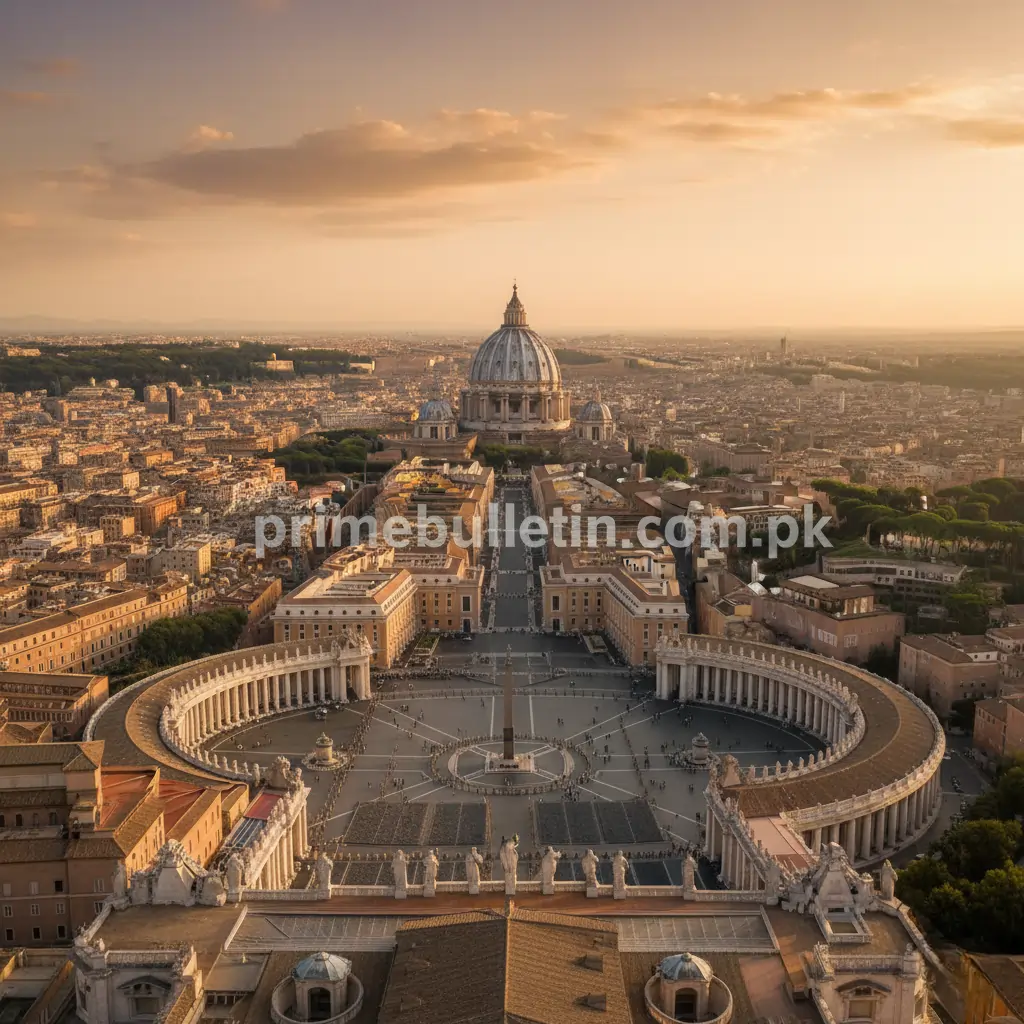
Vatican City bathed in golden sunset light, featuring St. Peter’s Basilica and St. Peter’s Square the spiritual heart of Rome and the world’s smallest yet most powerful country.
The Tiny Country with Global Power
When most people think of a country, they imagine wide lands and millions of citizens. Yet, nestled in the heart of Rome, Italy, lies Vatican City — a microstate smaller than many city parks.
Despite its small size, this remarkable nation holds enormous religious, cultural, and diplomatic influence as the spiritual center of the Roman Catholic Church.
Every year, people from around the world visit to experience the faith, art, and history that define this unique and sacred place.
Where Is Vatican City Located?
Vatican City (Stato della Città del Vaticano) is an independent country located entirely within Rome, Italy. It covers just 0.44 square kilometers (0.17 square miles), making it the smallest country in the world — both in area and population, with around 800–900 residents.
-
Capital: Vatican City
-
Currency: Euro (€)
-
Languages: Latin (official), Italian (commonly spoken)
-
Government Type: Theocratic Elective Monarchy
Though small, Vatican City functions as a fully sovereign state with its own passports, postal system, currency, stamps, and vehicle plates.
A Brief History of Vatican City
The roots of Vatican City trace back to ancient Rome. In the 4th century, Emperor Constantine built the first St. Peter’s Basilica over the tomb of Saint Peter, one of Jesus’ apostles and the first Pope.
For centuries, Popes governed the Papal States, large territories across central Italy. After Italian unification in the 19th century, those lands became part of modern Italy.
To resolve the long-standing conflict, the Lateran Treaty was signed on February 11, 1929, by Pope Pius XI and Benito Mussolini, officially creating Vatican City State — the world’s smallest and most independent nation.
Government and Citizenship
Vatican City is the only elective monarchy in the world, led by the Pope, who serves as both Head of State and spiritual leader of the Catholic Church.
He oversees the nation’s executive, legislative, and judicial functions.
Citizenship is reserved for those serving the Vatican — such as clergy members, nuns, Swiss Guards, and administrative staff. It is not permanent; it lasts only for the duration of their service.
Economy and Everyday Life
Vatican City’s economy is unlike any other. It has no income tax or industrial sector, and its main sources of revenue include:
-
Tourism, especially museum and basilica visits
-
Donations from Catholics worldwide (Peter’s Pence)
-
Sales of stamps, coins, medals, and souvenirs
-
Publishing and religious media
Most essentials — including food, energy, and water — are imported from Italy. Although there is no airport, Vatican City has a helipad and a short railway line used for official travel.
Top Attractions in Vatican City
Despite its size, Vatican City is home to some of the world’s most iconic landmarks and artistic treasures.
St. Peter’s Basilica
The heart of Vatican City and one of the world’s largest churches. Built over Saint Peter’s tomb, it showcases Michelangelo’s Pietà and a stunning dome offering panoramic views of Rome.
Visitor Tip: Dress modestly and visit early in the morning for a peaceful experience.
Vatican Museums
Founded by Pope Julius II in the 16th century, the Vatican Museums hold more than 70,000 works of art, including masterpieces by Raphael, Caravaggio, and Michelangelo.
Don’t Miss: The Sistine Chapel — a global symbol of art and faith.
Pro Tip: Book your tickets online to skip long queues.
Sistine Chapel
The Sistine Chapel is the sacred hall where Popes are elected. Its ceiling, painted by Michelangelo, illustrates scenes from Genesis, including the iconic Creation of Adam.
The Last Judgment behind the altar is another breathtaking masterpiece.
St. Peter’s Square
Designed by Gian Lorenzo Bernini, this vast square can hold tens of thousands of people during Papal addresses.
Every Sunday, visitors from all backgrounds are welcome to attend the Pope’s Angelus blessing.
Vatican Gardens
Nearly half of Vatican City is covered by lush, well-maintained gardens — serene spaces filled with fountains, sculptures, and greenery.
Entry is by guided tour only, making it a truly exclusive and peaceful experience.
Influential Figures of Vatican City
Pope John Paul II (1978–2005)
A globally respected leader, he played a key role in ending Communism in Eastern Europe and promoted peace and interfaith understanding.
Pope Francis (2013–Present)
Born Jorge Mario Bergoglio in Argentina, he is the first Jesuit and Latin American Pope. Known for his compassion and humility, he focuses on social justice, climate action, and inclusive dialogue.
Sister Raffaella Petrini (2025–Present)
In 2025, Sister Raffaella Petrini became the first woman to head the Vatican Governorate — a milestone in gender equality and leadership within the Church.
Interesting Facts About Vatican City
Vatican City is a UNESCO World Heritage Site in its entirety.
It is completely surrounded by Rome.
The Swiss Guard (est. 1506) is the world’s oldest active military unit.
Vatican City issues its own flag, coins, and passports.
It’s the only place in the world with ATMs that operate in Latin.
Why Vatican City Matters
Vatican City is more than a religious hub — it’s a universal symbol of peace, unity, and cultural preservation.
Every visitor, regardless of faith or background, can appreciate its artistic brilliance, historical depth, and global message of compassion.
Its influence extends far beyond its walls, reminding the world that greatness comes from purpose, not size.
Frequently Asked Questions (FAQs)
1. What makes Vatican City the smallest country in the world?
It spans only 0.44 square kilometers, making it the smallest recognized independent state by area and population.
2. Who governs Vatican City?
The Pope governs Vatican City as both spiritual leader and head of state.
3. Can anyone visit Vatican City?
Yes, visitors of all backgrounds are welcome. You can explore St. Peter’s Basilica, Vatican Museums, and St. Peter’s Square without a visa. A modest dress code is recommended.
4. Does Vatican City have an army?
Yes — the Swiss Guard serves as its ceremonial and protective security force.
5. Is Vatican City part of the United Nations?
No. The Holy See holds permanent observer status, but Vatican City itself is not a UN member.
6. When is the best time to visit?
Visit during April–June or September–October for pleasant weather, fewer crowds, and ideal sightseeing.
Conclusion
Tiny yet influential, ancient yet alive — Vatican City bridges faith, art, and humanity.
Whether you visit for history, spirituality, or curiosity, you’ll find a place that welcomes all and inspires reflection.
Its message is simple but timeless: unity, peace, and purpose can flourish anywhere — even in the smallest of places.
About the Author